Fonds Bleu Bassin du Congo

Category: Non classé

  • COP26 : la RDC, moins bien financée que l’Afrique du Sud, alors qu’elle détient 60% des forêts du bassin du Congo

    COP26 : la RDC, moins bien financée que l’Afrique du Sud, alors qu’elle détient 60% des forêts du bassin du Congo

    “La diplomatie congolaise n’est pas aussi efficace que les proches du pouvoir nous le font croire”, d’après Jean Serge Tshiben. Pour preuve, la RDC qui possède non seulement  60% du bassin du Congo, mais aussi des matières premières très nécessaire pour la transition énergétique, a reçu moins de financement  que ” les  pays comme l’ Afrique du Sud et la République du Congo, qui eux,  ont reçu plus de soutien financier “.

    Ce cadre du PPRD ( parti du peuple pour la reconstruction et le développement ) rappelle les accords initiés sous l’ère Kabila qui devaient déboucher à un financement de 500 millions de USD pour la protection de nos forêts..

     ‘’Dans son temps, le Gouvernement Kabila a fait la réorganisation du code forestier. Nous avions signé des grands partenariats avec le ministère de l’Environnement avec des fonds tels que CAFI (Central African Forest Initiative ),  le Congo devait bénéficier de plus de 500 millions de USD à partir de ce mois de décembre”. Cet élan a été coupé par le régime actuel. Le voyage de Glasgow en est l’illustration.  “Le régime actuel  a préféré faire voyager  plus de 250 personnes, ne maîtrisant pas les données techniques. à Glasgow pour négocier sur le climat. Et les experts du ministère de l’Environnement  sont restés au pays”.

    Notons, à Glasgow ( ville située au centre ouest de l’Ecosse) où se tient le débat autour du climat,  le pays de Mandela s’en sort avec une enveloppe de 7 milliards de USD pour sa transition énergétique, une somme bien plus importante que celui de l’ensemble des pays du bassin du Congo qui s’est chiffré à 150 millions USD.

    Source :  https://www.mediacongo.net/article-actualite-96018_cop26_la_rdc_moins_bien_financee_que_l_afrique_du_sud_alors_qu_elle_detient_60_des_forets_du_bassin_du_congo.html

  • Comment gérer les flux migratoires des réfugiés climatiques en RDC ?

    Comment gérer les flux migratoires des réfugiés climatiques en RDC ?

    Source : radiookapi.net

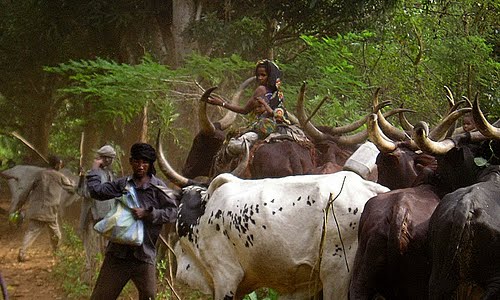
    Depuis quelques années, la RDC accueille dans sa partie orientale les différentes vagues des Mbororo qui sont les éleveurs des gros bétails à la quête du pâturage pour leurs vaches. Selon certains experts, la RDC devrait se préparer à faire face à cette nouvelle mode de migration des populations qui sont obligées de se déplacer à la suite du changement climatique. – Comment gérer les flux migratoires des réfugiés climatiques en RDC ?

    Jody Nkashama discute de ce sujet avec le professeur Raphaël Tshimanga, directeur du Centre des Recherches des Ressources en Eau du Bassin du Congo (CREEBac).

    L’hydro-climatologue Modeste Kisangala Moke a aussi participé à cet entretien.


  • Amazon Founder, Jeff Bezos, Set To Pledge About A Billion Dollars For Africa’s Land Restoration

    Amazon Founder, Jeff Bezos, Set To Pledge About A Billion Dollars For Africa’s Land Restoration

    Source : therichest.com

    Amazon founder, Jeff Bezos, has pledged more than £700 million for the Africa land restoration. It was reported on November 1, 2021, that Jeff Bezos is set to commit exactly £732 million for the land restoration of Africa, which is about a billion-dollar converted. At the Cop26 event in Glasgow, the billionaire has stated that he matched the previous contribution made through the Bezos Earth Fund and funded the Africa Land restoration as well.

    The said event was also attended by the Prince of Wales, French President Emmanuel Macron, European Commission President Ursula von der Leyen, president of Nigeria, the president of Mauritania, and representatives of the World Bank and African Development Bank. The event is about the Great Green Wall initiative, which intends to plant 20 million trees across 8,000 kilometers that encompass the width of Africa to counter the current desertification on Africa.


    RELATED: Evergrande Crisis: Elon Musk, Jeff Bezos, And Warren Buffett, Among Others To Lose Over $26 Billion

    Bezos added that specific action must be taken so that the next decade will still be full of trees and livable for future generations. He also said that he wants the next decade to be decisive. He pointed out that the current decade is decisive, and they cannot let the next decade be indecisive. If he does not do things now, the next decade will be undecisive.

    Just last month, he committed a billion-dollar in grants to support nature conservation and will be starting with the tropical Andes and the Congo basin countries.


    Earlier this year, Bezos was in the hot seat with the climate activists after funding a project to go into space. However, he said that he does not want an enemy and consider him as an ally. Bezos will be the second billionaire space jockey following Richard Branson when he rode Virgin Galactic spacecraft on July 11. If everything goes exactly as planned, Bezos will spend about four minutes suspended weightless on the lowest rung of the suborbital space. For someone as rich as Bezos, who has funded the space venture called Blue Origin with at least $5.5 billion, that would be about $1.38 billion spent per minute.

    Bezos said that he wants to focus on the commitment to the landscape restoration that is currently focused on Africa. Bezos also wants to work with different significant platforms already established and can scale, including the Africa 100 and Great Green Wall.

  • Woodbois attends COP26 in Glasgow as part of Government of Gabon envoy

    Woodbois attends COP26 in Glasgow as part of Government of Gabon envoy

    Source : proactiveinvestors

    “While the final outcome from COP26 currently remains in the balance, what has been clearly evident throughout the conference is the willingness of the private sector to mobilise capital for nature-based solutions in order to address global warming”

    Woodbois Limited announced it attended COP26 in Glasgow having been accredited to participate by the Government of Gabon.

    The forestry, timber trading, reforestation and voluntary carbon credit company has over 166,000 hectares of concessions for sustainable forestry in the African country.

    READ: Woodbois appoints former LafargeHolcim and Compass director as chief executive

    Board members and the senior leadership team of the AIM-listed group engaged with key stakeholders and took part in discussions on tackling climate change and promoting the role Woodbois can play in supporting host countries and international businesses in achieving their pledges.

    Woodbois held meetings with Gabon’s Minister of Forests, Oceans, Environment and Climate Change and other government representatives.

    Gabon has lobbied throughout COP26 for developed nations to recognise the value to the planet of the Congo basin’s forests as carbon sinks.

    The Woodbois team also met Ministers of Forestry and the Environment from multiple other African countries, who were “universally interested” in the potential benefits of its model of sustainable forestry and carbon sequestration through scalable reforestation projects.

    “While the final outcome from COP26 currently remains in the balance, what has been clearly evident throughout the conference is the willingness of the private sector to mobilise capital for nature-based solutions in order to address global warming,” said executive chair Paul Dolan.

    “Evidence of a climate crisis and the value of the earth’s remaining tropical forests as a key mitigant, is recognised by people throughout the world and can no longer be ignored by policymakers. While we hope for a COP26 outcome containing strong commitments to action from the 180+ countries in attendance, our conviction is that regardless of outcome, a framework for a global carbon market bringing the ability to price carbon emissions and offsetting sequestration is inevitable, and we will continue to position the company accordingly.”

  • DRC to crackdown on illegal foresting, after taking a tough stance on mining

    DRC to crackdown on illegal foresting, after taking a tough stance on mining

    Source : The Africa Report.com 

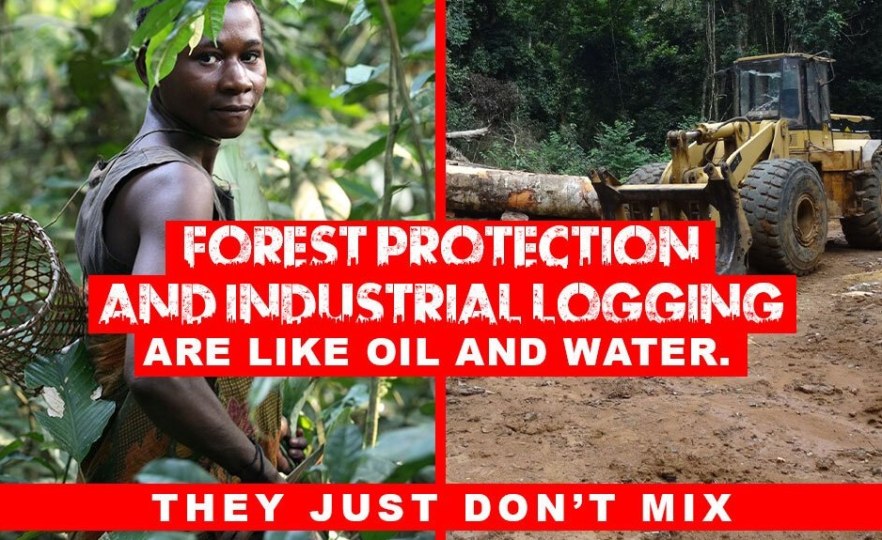
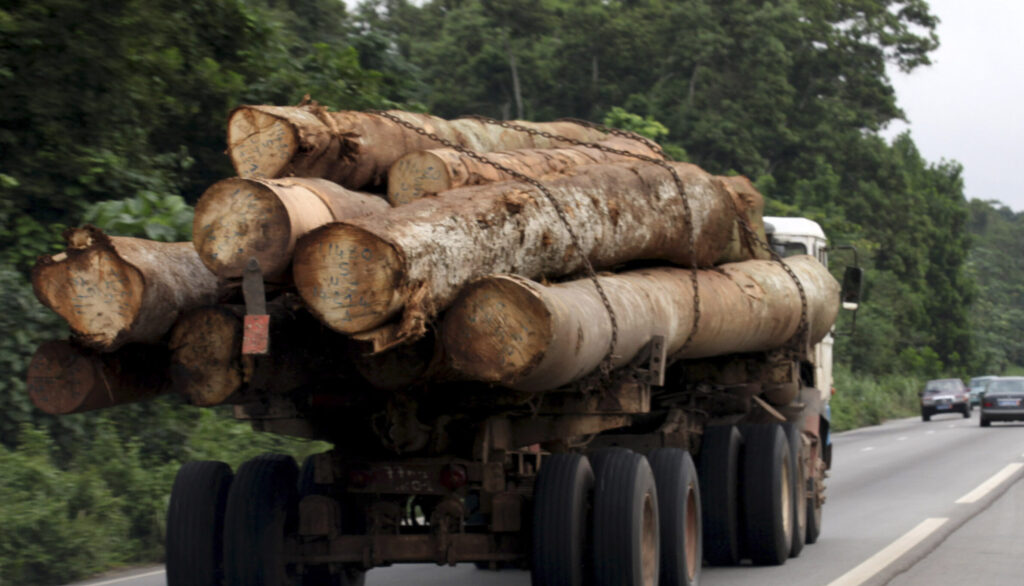
    In the midst of a global climate conference, DRC is taking a tougher line against deforestation. It has announced a ban on log exports in an attempt to regain control of its forests after having launched a similar process in its mining sector.

    The announcement came a few days before COP26, the world climate conference that opened on 31 October, and it was no doubt planned that way. On 28 October, Eve Bazaïba, the DRC’s environmental minister, announced that the country intended to ban all log exports soon.

    READ MORE DRC: Gécamines takes over the artisanal cobalt mining sector

    In addition to this strong announcement, the minister promised that other measures would be introduced to limit deforestation and preserve the species living in the Congo Basin forest, the second largest river forest on the planet, just behind the Amazon.

  • Congo-Kinshasa: COP26 – Landmark $500 Million Agreement Launched to Protect the DR Congo’s Forest

    Congo-Kinshasa: COP26 – Landmark $500 Million Agreement Launched to Protect the DR Congo’s Forest

    Source : allafrica.com

    Forest loss in DRC is exacerbated by extreme poverty, mainly due to a growing population lacking livelihood

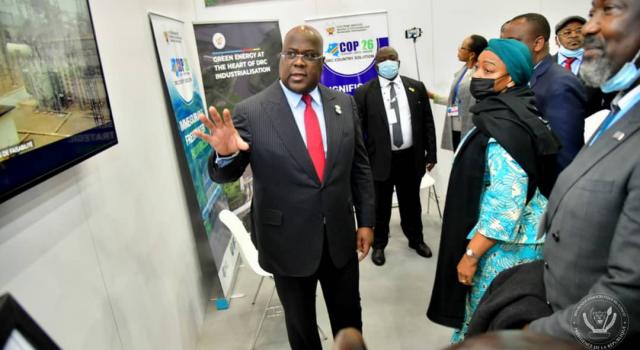
    President Félix Tshisekedi of the Democratic Republic of Congo (DRC) and Prime Minister Boris Johnson of the United Kingdom on behalf of the Central African Forest Initiative (CAFI) last week endorsed an ambitious 10-year agreement (2021-31) to protect the Congo Basin rainforest – the world’s second largest.

    The agreement will unlock on-the-ground multi-donor investments of US$500 million for the first five years.

    “With its forests, water and mineral resources, the Democratic Republic of Congo is a genuine “Solution Country” to the climate crisis. To protect our forest and promote its sustainable management, our priority, backed by this new partnership, is to strengthen governance and transparency across all land use sectors. The Partnership will also support our ambition to respond to the dual challenge of food security and climate change through sustainable agriculture, primarily in the savannahs”, said President Tshisekedi.

    All sectors of the DRC’s economy have joined in this landmark agreement to undertake actions that could change land use practices that date back millennia. These concerted efforts are essential in a country the size of Western Europe with one of the lowest human development indices in the world, and that loses nearly half a million hectares of forest every year.

    Through this new multi-year partnership, the DRC aims to first cap forest cover loss at its 2014-2018 average and ensure that deforestation continues to decline. The partnership will also promote the regeneration of 8 million hectares of degraded land and forests, and place 30% of national areas under a protection status, including areas where local communities undertake efforts to manage forests sustainably.

    Lord Goldsmith, UK Minister for Pacific and the Environment declared: “The UK is proud to be signing this ambitious ten-year Letter of Intent with the Central African Forest Initiative alongside the Democratic Republic of the Congo. This is a crucial step forward in our efforts to protect and restore the country’s precious forests, as well as providing sustainable livelihoods and alleviating poverty.”

    Exacerbated by extreme poverty, forest loss in the DRC is mainly due to a growing population lacking livelihood opportunities outside the forest and relying mostly on fuelwood for cooking, all that in the absence of land use planning. Any solution proposed to stem forest loss in the DRC must therefore focus on rural development, poverty reduction, and better food security.

    CAFI’s support of $500 million over the first five years more than doubles the $190 million provided under the first Letter of Intent (2015-2020), whose objectives were delivered through a portfolio of close to twenty programmes that supported large-scale reforms in agriculture, land-use planning and land tenure; directed agricultural activities towards tens of thousands of hectares of savannahs; and improved the livelihoods of hundreds of thousands of people.

    The announcement at COP26 concludes months of discussions between CAFI donors and DRC Ministers, in which national civil society was fully involved. In a communiqué, Guy Kajemba, National coordinator of the umbrella civil society organisation “Groupe de Travail Climat REDD+ Rénové” declared:

    “We welcome this renewed partnership. It will help us closely monitor commitments taken, including the steps that will lead to a responsible and progressive lifting of the moratorium, the publication of contracts in all sectors linked to the use of land and the commitment taken by President Tshisekedi to cancel all dubious contracts of forest concessions. We are particularly encouraged by the mobilisation of all sectors committed to protect our High Value Forests and peatlands.”

    12 CONCRETE OBJECTIVES OF THE DRC-CAFI LETTER OF INTENT 2021-2031

    1. High value forests, peatlands and community forest concessions are systematically incorporated into land-use plans, with the aim of maintaining the important role they play.
    2. The proportion of unsustainable wood energy (e.g. charcoal) for cooking is halved in the main urban centers (note: 97% of Kinshasa 13 million inhabitants use fuelwood daily for cooking and consume over 17 million tons of wood per year, mainly sourced in an unsustainable manner).
    3. No agro-industrial concessions will be allocated in high value forests and peatlands.
    4. Transparency in natural resources governance is enhanced through the legal review of existing agriculture, logging, mine and oil concessions, the cancellation of illegal ones, as well as the publication of all contracts (linked to the Extractive Industries Transparency Initiative – EITI).
    5. Transparent allocation procedures are followed for agriculture and logging concessions.
    6. Forest governance is improved through stronger control and an ambitious 5 million hectares target of community forestry, doubling the original national target, along with a legal and regulatory framework adopted to protect the rights of indigenous peoples. The signature of the Decree lifting the moratorium will be adopted only after the realization, on the basis of a consultative process, of the geographical programming of future allocations.
    7. In line with the global 30 x 30 commitment, the DRC commits 30% of the country to be under various forms of protection status by 2030 while respecting the right to free prior and informed consent and ensuring the voice of marginalized communities are heard. This includes areas that communities themselves dedicate to protection through a local-level zoning process they lead.
    8. Eight million hectares of degraded lands and forests will be restored, as per the pledge of the DRC under the Bonn Global Challenge on restoration of degraded and deforested landscapes.
    9. The new and innovative tenure law and policy are adopted and implemented, with the deployment of a decentralised tenure information system that include community-level tenure registries.
    10. New social and environmental standards are implemented to reduce the impact of mining and oil investments on forests and biodiversity, with reinforced measures in high value forests and peatlands. Any activity incompatible with conservation objectives in Protected Areas is banned.
    11. A national population policy that is rights-based, evidence-informed and gender-responsive is implemented to promote a demographic transition that stimulates economic growth and reaches development objectives.
    12. A model of forest-friendly special economic zone is piloted to support a low-deforestation green economy, and takes into account high value forests, peatlands and land planning processes.

    FACTSHEET

    • The DRC’s forest represents 10% of the world’s tropical forests. Its peatlands cover 100,000 km2 and are the largest in the world. Its ecosystem offers a carbon absorption service equivalent to 10 years of global emissions. The many commitments reflected in the new Letter of Intent demonstrate DRC’s high level of resolve to establish a low-deforestation green economy.
    • Supported by European countries, the Republic of Korea, the European Union and the United Kingdom of Great Britain and Northern Ireland, the Central African Forest Initiative (CAFI) is a United Nations Trust Fund and policy dialogue platform that aims to support six Central African countries in pursuing a low-emission development pathway that ensures economic growth and poverty reduction while protecting the forests and natural resources, on which people depend.
    • CAFI thus combines investments and high-level policy dialogue to help its six partner countries implement the 2015 Paris Agreement on climate change, fight poverty and develop sustainably while being aligned with the post-2020 biodiversity framework.
    • The Central Africa’s tropical rainforest is under pressure. While trends and causes vary widely across national contexts, forest loss represents more than 6 million hectares of primary tropical forest since 2001, equivalent to about 6 million rugby fields.
    • Home to more than 10,000 plant and animal species, many of them endemic, the Central African rainforest is an indispensable source of food, energy, shelter and spirituality in countries with some of the lowest human development indexes and the largest number of people in urgent need of food security assistance in the world.
    • The Congo Basin is one of the last regions in the world to absorb more carbon than it emits. Its forest, the second largest in the world, absorbs nearly 1.5 billion tonnes of CO2 from the atmosphere every year or 4% of global emissions.
  • Congo Basin forests: Climate science needed to unlock its value

    Congo Basin forests: Climate science needed to unlock its value

    Source : The Africa Report.com

    The COP26 donor statement committing $1.5bn to support the protection of the Congo Basin forests marks a watershed moment for the region.

    The tropical forests of Central Africa are a world away from chilly Glasgow, yet they lie at the heart of the world’s collective drive to tackle climate change. The COP26 donor statement committing $1.5bn to support the protection of the Congo Basin forests marks a watershed moment for the region. For the first time, the global significance of the ecosystem services these forests provide has been recognised and valued.


    The Congo Basin forests sequester carbon equivalent to around 4% of global emissions, protect precious biodiversity, support the livelihoods of 80 million people who live in and around the forest and – through their role in regulating rainfall from the Ethiopian highlands to the Sahel – support 300 million rural Africans. There’s real and massive value at stake.

    READ MORE DRC to crackdown on illegal foresting, after taking a tough stance on mining

    Monitoring the effectiveness with which funds to protect the Congo Basin’s forests are deployed is therefore critical. Scientific data is key to measuring impact and creating trust.

    A recent article in Nature magazine authored by Central African Ministers of Environment and scientists called for a ten-year climate science programme to study the role of the Congo Basin forests in climate change mitigation and biodiversity conservation.

    Science and conservation

    We share the authors’ conviction that science must inform conservation development practice in tropical forest ecosystems. This was the motivation for The African Conservation Development Group (ACDG) to launch forestLAB, along with founding partners the LSE’s Grantham Research Institute on Climate Change and the Environment and the University of Stirling, which has a 40-year research history studying the Congo Basin forests through its research station at Lope in Gabon.

    READ MORE Sahel’s Great Green Wall: It’s not just about planting trees

    forestLAB has also signed a partnership agreement with CENAREST, the National Research Institute of Gabon, to ensure alignment with national research interests and support the next generation of scientific researchers in Central Africa.

    Part of forestLAB’s work will include refining a new landscape-scale sustainable development methodology for tropical forest ecosystems. This model is applicable to our Grande Mayumba project in southern Gabon, which will protect critical biodiversity and provide regional socio-economic uplift while avoiding up to 200 million tonnes of carbon emissions over 25 years. Over a third of the land area is being set aside for biodiversity conservation.

  • COP 26 : Nicaise Moulombi répond présent et plaide pour l’économie verte.

    COP 26 : Nicaise Moulombi répond présent et plaide pour l’économie verte.

    Source : 7joursinfo.com

    Arrivé à la COP26 le samedi 6 novembre 2021 à Glasgow afin de prendre part à la grande marche pour la justice climatique en faveur de l’Afrique, le Président Exécutif du ROSCEVAC, Nicaise Moulombi, aurait pu ne pas prendre part à cette grand- messe pour le climat où il était attendu pour présenter la position commune des organisations de la société civile du bassin du Congo deuxième poumon écologique de la planète.

    Pour rappel, son visa pour Glasgow fût refusé pour la première fois alors que ce fût le contraire pour tous les membres de la délégation qu’il conduit à cette 26e conférence des parties où la société  civile africaine est très faiblement représentée.

    Aussi, le Président du ROSCEVAC a déclaré « le changement climatique n’est pas une utopie, c’est le premier facteur responsable de la perte de nos forêts, avec des conséquences sur la biodiversité et la mise en œuvre de l’agenda 2063. Il y a donc un problème de gouvernance au moment où nous sommes sur le point d’ouvrir la zone de libre-échange continentale africaine ». Nicaise Moulombi poursuit en disant « il faudrait que l’accord puisse mettre un accent particulier sur l’alternative aux énergies renouvelables ».

  • COP26: sur le financement climat, la Belgique tente de parler d’une seule voix à Glasgow

    COP26: sur le financement climat, la Belgique tente de parler d’une seule voix à Glasgow

    Source : lavenir.net

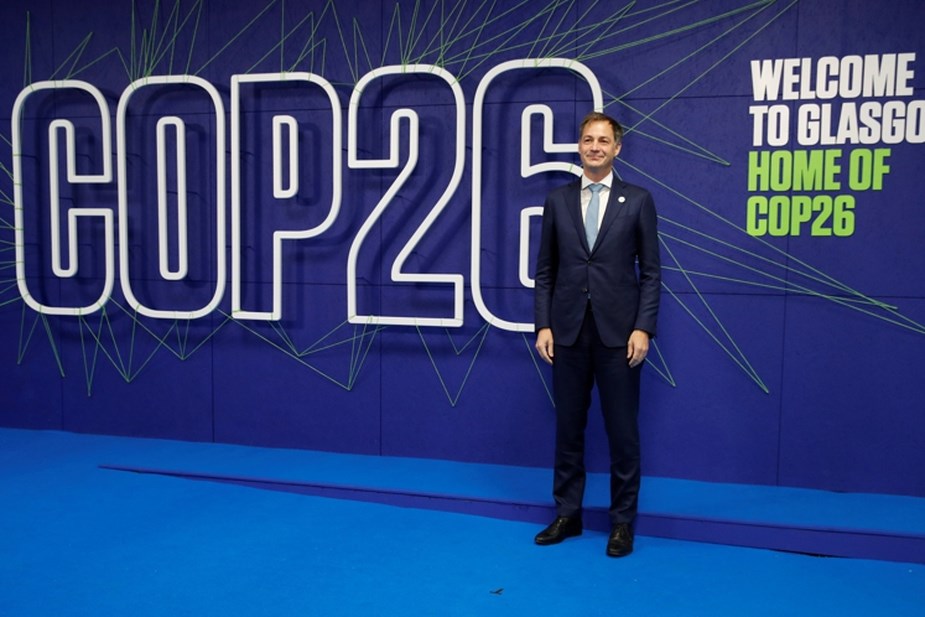
    Deux ministres régionaux, une fédérale: la Belgique a tenté de parler d’une seule voix, mercredi à Glasgow, lors d’un évènement consacré au financement climatique international.

    Notre pays a exposé ses efforts financiers à destination des pays du Sud, affichant une unité de façade.

    Mais en l’absence de Zuhal Demir, ministre flamande du Climat restée en Belgique pour cause de Covid-19 au sein de son cabinet, le gouvernement flamand a brillé par son absence.

    Ce “side-event”, dans le jargon des conférences climat, était organisé mercredi après-midi, en marge de la COP26, au lendemain d’une journée qui a vu les différents étages de la Maison Belgique étaler au grand jour leurs divergences. Le ministre wallon Philippe Henry, qui préside la Commission nationale climat (CNC), a en effet dû constater mardi le fait que “malgré les efforts déployés”, il serait impossible d’aboutir à un accord intra-belge à court terme, et a fortiori lors de la COP26, sur le partage des efforts en matière de politique climatique. Ceux qui avaient espéré un accord intra-belge sur le “burden sharing”, du moins dans ses grandes lignes, avant Glasgow, ont eu pour leurs frais.

    Mercredi, la ministre fédérale de la Coopération au développement, Meryame Kitir, flanquée du ministre bruxellois du Climat, Alain Maron, et de son homologue wallon Philippe Henry, a exposé les efforts belges en matière de financement climat et les résultats obtenus sur le terrain, comme au Sahel. L’aide belge fait la part belle à l’adaptation aux conséquences des changements climatiques et peut se reposer sur des projets de qualité et l’expertise reconnue de l’agence de développement Enabel. La Belgique s’est également engagée récemment à lutter activement contre la déforestation dans le monde, et notamment dans le bassin du Congo, avec une contribution prévue de 200 millions d’euros sur cinq ans.

    Le financement climat international est un sujet crucial à la COP26 alors les pays développés ont échoué à respecter leur promesse de verser 100 milliards de dollars par an aux pays du Sud à partir de 2020. Avec près de 80 milliards de dollars atteints en 2019, cette promesse ne serait respectée qu’en 2023, selon l’OCDE, laissant les pays en voie de développement bien marris.

    La Belgique, qui n’a elle-même pas été épargnée cet été par les effets dévastateurs du dérèglement climatique, avec les inondations meurtrières de la mi-juillet, a tenté de démontrer sa bonne foi. Notre pays a consacré 728 millions d’euros entre 2013 et 2020 au financement climat à destination des pays les plus vulnérables au changement climatique. Les montants consacrés ont été revenus à la hausse et devraient l’être encore à l’avenir. “Les financements ne sont pas encore assez importants”, a reconnu Mme Kitir, “mais quand votre propre pays est en crise, ce n’est pas si évident ni si facile d’augmenter le financement climat. Nous avons pu le faire et je suis fière de cela”, a ajouté la ministre fédérale.

    Pour le CNCD-11.11.11, l’évènement officiel de ce mercredi s’apparente toutefois à une “occasion manquée”. “Nous sommes déçus de voir que les querelles institutionnelles belges ont pris le pas sur la solidarité internationale”, réagit Rebecca Thissen, chargée de recherche en justice climatique. “Un engagement ambitieux, clair et pluriannuel est pourtant un élément essentiel pour garantir la prévisibilité des financements alloués et donc renforcer la confiance dans les négociations climatiques internationales”.

    Le CNDC-11.11.11 salue en revanche le fait que le gouvernement fédéral et les Régions bruxelloise et wallonne ont annoncé de nouvelles contributions, faisant ainsi “un pas vers plus de justice climatique”. La coupole d’ONG estime qu’un financement climatique “juste” de la Belgique devrait atteindre 500 millions d’euros par an.

    Quant au député bruxellois Christophe De Beukelaer, présent à Glasgow, il se dit “abasourdi”. “Après l’échec du burden sharing, on s’attendait à un sursaut de la part des ministres belges du Climat, avec l’annonce d’une contribution nationale pluriannuelle conséquente. Mais non, rien de ceci. On a plutôt eu droit à une séance de communication qui a mal réussi à masquer le malaise”, fustige le député cdH.

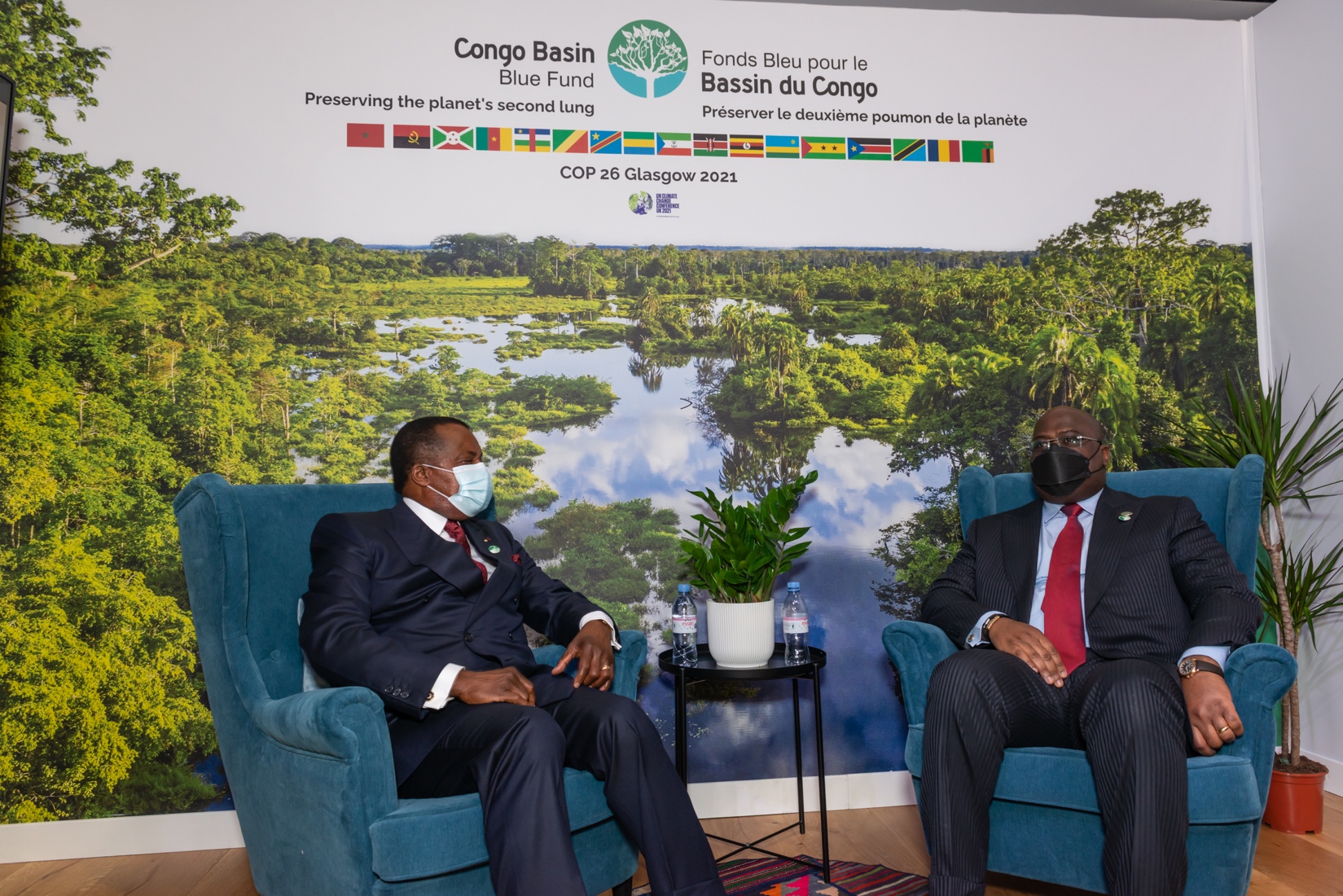
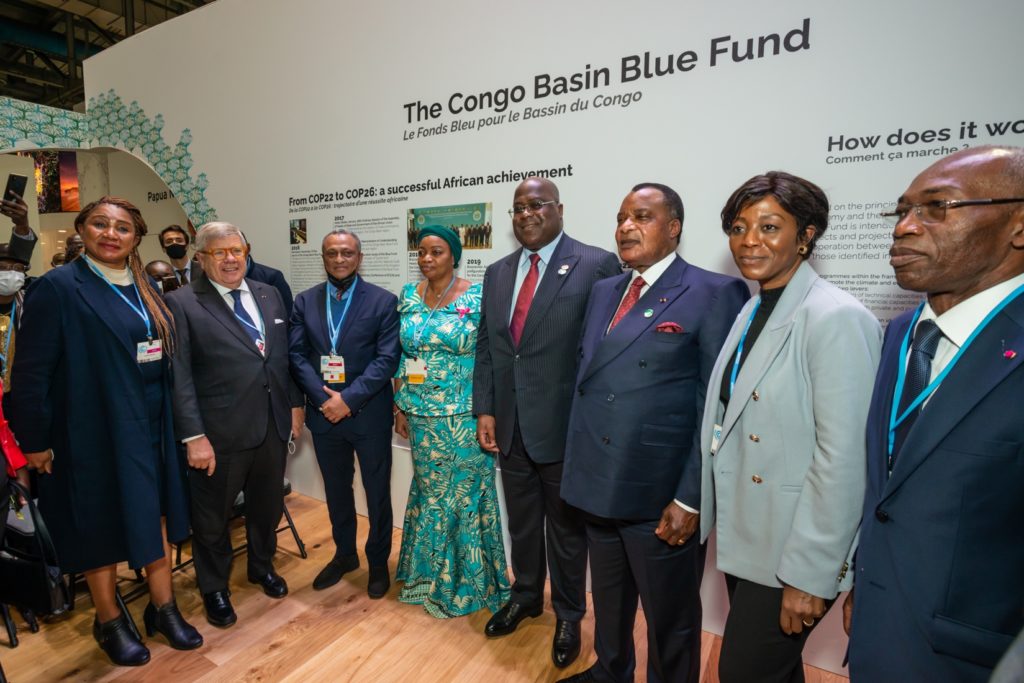
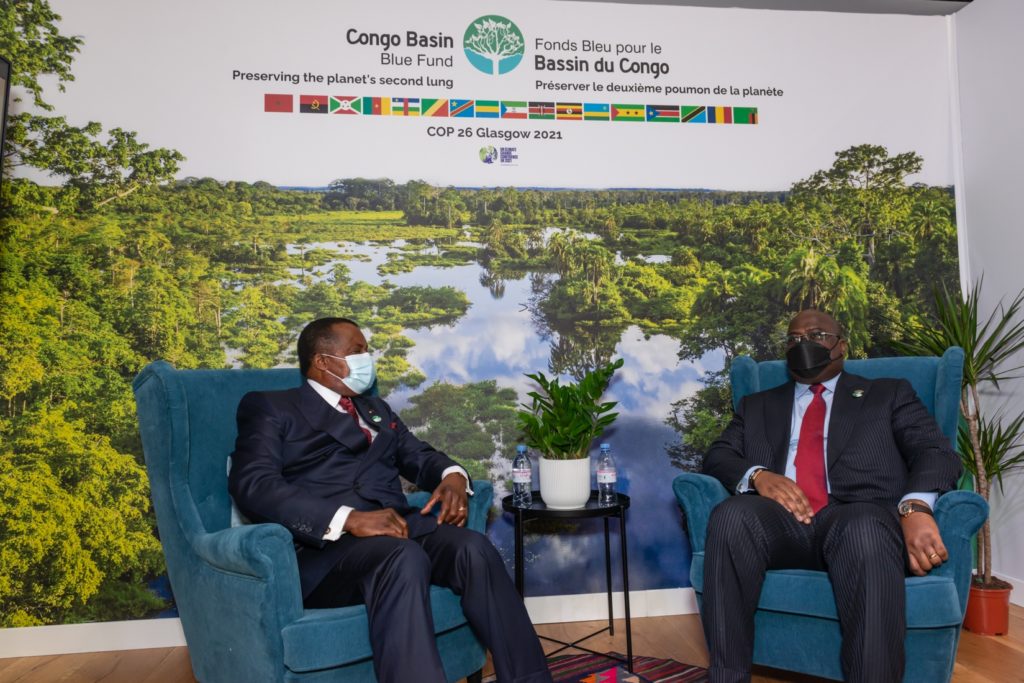
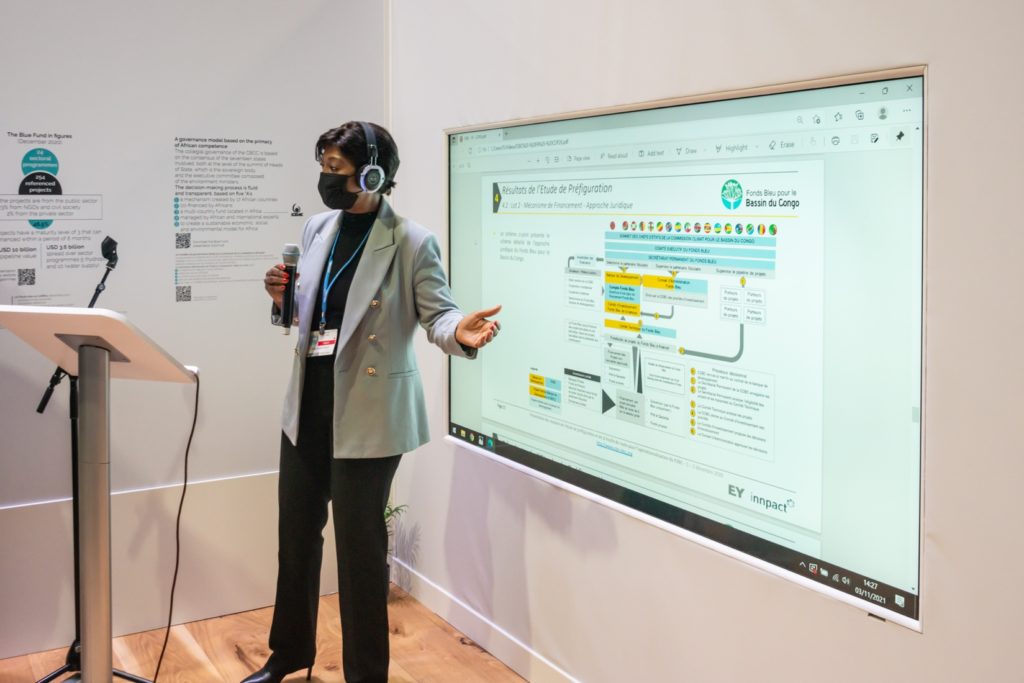
  • COP26 : Les présidents Sassou Nguesso et Tshisekedi sur le Pavillon de la Commission Climat du Bassin du Congo pour présentation de la structuration du Fonds Bleu

    COP26 : Les présidents Sassou Nguesso et Tshisekedi sur le Pavillon de la Commission Climat du Bassin du Congo pour présentation de la structuration du Fonds Bleu

    Le dimanche 31 octobre 2021, s’est ouverte la 26e Conférence des Nations Unies sur les changements climatiques où de nombreuses délégations africaines ont fait le déplacement, notamment la Commission Climat du Bassin du Congo (CCBC), qui rassemblent 16 pays de la sous-région dont les deux Congo : la République du Congo, et la République Démocratique du Congo.

    Parmi les nombreux défis visant à maintenir le réchauffement climatique sous la barre des 1,5 °C, conformément à l’Accord de Paris, les dirigeants mondiaux doivent s’engager à lutter contre la déforestation à l’horizon 2030.  La déclaration conjointe des donateurs prévoit d’agir collectivement pour arrêter et inverser la perte générale de couvert forestier.

    Dix pays[1] se sont d’ores et déjà engagés à mobiliser 10,3 milliards d’euros de fonds publics entre 2021 et 2025, dont 1,3 milliards dédiés à protéger le bassin du Congo. Désormais, les pays donateurs doivent concrétiser cet engagement prometteur.

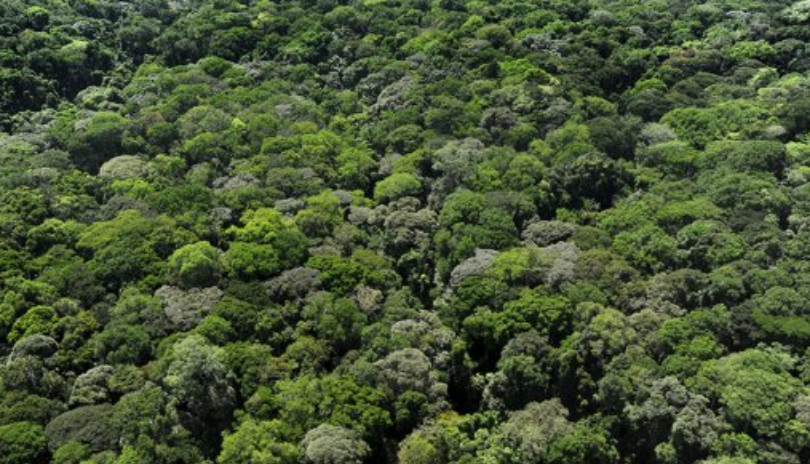
    Deuxième poumon écologique après l’Amazonie, le bassin du Congo abrite 10 % de la biodiversité mondiale.  La planète respire aujourd’hui grâce à ce poumon. Outre ses 222 millions de km2 de forêt, le bassin du Congo abrite les plus vastes tourbières tropicales au monde. Elles séquestrent 31 milliards de tonnes de carbone, l’équivalent de 3 années d’émission de la planète. Le bassin du Congo est ainsi devenu le régulateur du climat mondial.


    [1] Allemagne, Belgique, Corée du sud, États-Unis, France, Japon, Norvège, Pays-Bas, Royaume-Uni, Suède.